18,000 euros was the amount of damage caused when thieves broke into an almost finished building shell and took all the materials for the interior work. The client ordered a replacement and deducted the costs from the wages. The construction company sued – and lost.
The Saarbrücken Higher Regional Court clarified that the contractor bears the full risk for his materials and tools before acceptance, even if only the client had a key to the building.
What sounds unfair at first glance is actually the law and affects thousands of construction companies in Germany every year. However, if you know the legal situation, you can protect yourself effectively. This is exactly what this article is about.
§ 644 BGB: The law that many construction managers don’t have on their radar
The legal basis is clear. § Section 644 (1) sentence 1 of the German Civil Code (BGB) regulates the so-called transfer of risk in the law on contracts for work and services: “The contractor shall bear the risk until acceptance of the work.”
In concrete terms, this means that as long as acceptance has not taken place, the risk of damage, destruction or loss lies with the executing company. And not just for the trade itself, but also for all the materials, tools, machines and aids required to produce it.
In practice, this means that if copper cables are stolen from the construction site at night, the tradesman must replace them at his own expense. If an already installed radiator is torn out of the wall, the installer bears the costs. And even if the builder is the only person with the house key, this does not change the distribution of risk. This was expressly ruled by the Saarbrücken Higher Regional Court.
The decisive factor is that this regulation applies regardless of whether the contract is based on a BGB or VOB contract. The courts consistently uphold the principle that the freedom to decide on the protection of one’s own materials lies with the entrepreneur.
What the insurance pays and what it doesn’t
Many construction companies rely on their construction insurance. But this is precisely where a dangerous gap lurks. As a rule, theft protection within the scope of construction work insurance only relates to parts that have already been permanently installed. An assembled washbasin is insured, but the same washbasin, still packed in a container, is not.
Some insurers do offer additional options that extend this protection. But even then, conditions often apply: the construction site must be demonstrably secure, for example with fencing, lighting or monitoring systems. If this proof is missing, the insurance company can refuse or reduce the settlement.
Construction site theft in figures and why waiting is not an option
The economic dimensions of construction site theft are considerable. Experts estimate the annual damage to the German construction industry at over 80 million euros and the trend is rising.
According to a survey from 2025, 56% of the decision-makers surveyed from the energy sector and critical infrastructure report increasing crime on their construction sites. For critical infrastructure projects, the figure is as high as 70 percent.
But the pure material value only tells part of the story. This is because 43 percent of all projects are delayed due to construction site crime. Almost a quarter of those surveyed reported delays of up to four weeks. In every eighth case, construction projects cannot be continued temporarily.
What’s more, around 88 percent of all construction companies and construction machinery rental companies surveyed have already been affected by construction site theft at least once. At the same time, a third of those robbed do not report the theft to the police because they are afraid of the effort involved or believe that reporting it to the police would be useless anyway. The number of unreported cases is therefore considerable.
What building contractors can do now
The good news is that you can significantly reduce the risk through a combination of contractual, organizational and technical measures.

Check and adapt contracts
Construction specialist lawyer Rainer Schilling recommends consciously including the transfer of risk in contract negotiations. Legally competent parties are increasingly making arrangements whereby liability for newly occurring damage is transferred to the client after joint inspections, even if this does not constitute formal partial acceptance.
Creating an organizational basis
Valuable materials and tools belong in locked containers in the evening. Visitor lists and documented key management help to identify unauthorized persons. And cooperation with the local police can noticeably shorten response times.
Targeted extension of insurance cover
Check whether your construction insurance also covers materials that have not been installed. Additional construction machinery insurance and transporter insurance can close gaps. Important: Document your security measures, as many insurers link settlement to proof of adequate security.
Use technical monitoring
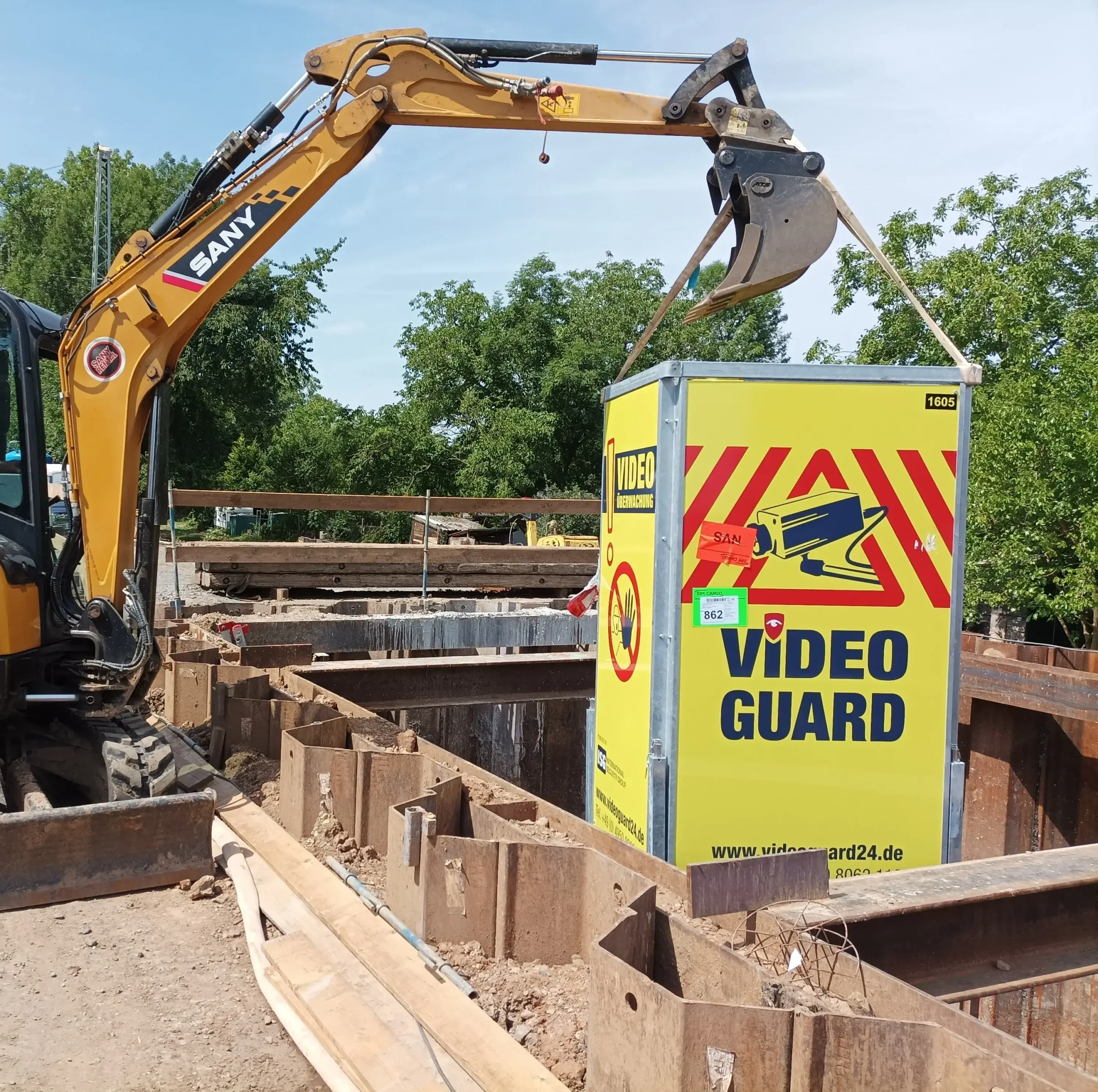
Especially at night and at weekends, when most thefts occur, mechanical security systems alone are not enough. Mobile video surveillance systems with AI-supported motion detection automatically recognize suspicious activities and differentiate between people, vehicles and animals.
Conclusion: Liability begins before acceptance and so should the protection
The legal situation is unambiguous: According to § 644 BGB, the contractor bears full responsibility for his materials, tools and construction work until acceptance. At the same time, building work insurance does not cover everything, especially materials that have not been installed often remain uninsured.
Any building contractor or site manager who does not actively invest in safety today is taking a calculable risk that can be minimized with relatively little effort. Contractual regulations, a well thought-out insurance strategy and modern surveillance technology such as our VIDEO GUARD form an effective protective shield.
Because every night that a construction site remains unsecured is a night in which you bear the full risk – legally, financially and operationally.