Theft from farm stands and pick-your-own fields is no longer a trivial offense. Operators of pick-your-own farms report that up to one-third of the harvest is consumed without payment, and farm stands with honor-system cash registers regularly incur losses ranging from several hundred to a thousand euros per incident. Traditional measures such as warning signs or flat-rate admission or food and beverage fees are often not enough to stop the shrinkage. Mobile video surveillance with AI-powered detection and a connected control center offers farmers and farm store operators effective protection without detracting from the charm of direct sales.
When Trust Becomes a Trap
Strawberries straight from the field, eggs from the farm stand, freshly cut asparagus: Direct marketing is based on a simple principle—mutual trust. Customers pay fairly, and farmers offer fresh produce without much oversight. But it is precisely this trust that is increasingly being exploited.
More and more operators of pick-your-own farms and farm stands are reporting that customers are brazenly taking advantage of their offerings. The spectrum ranges from a little “snacking” to deliberately filling buckets they’ve brought along, all the way to large-scale nighttime theft using a van. At the farm stand, cash boxes—and their contents—disappear; buttons, foreign currency, or counterfeit gift certificates end up in the containers.
What sounds like isolated cases has long since become a widespread phenomenon that threatens people’s livelihoods.
Farm Store Robbed and Fields Looted: How Severe Is the Damage, Really?
The figures are sobering. According to Agrarheute, operators of pick-your-own farms report that about one-third of the strawberry harvest ends up in visitors’ mouths without being paid for. A farmer from the Palatinate estimates his annual losses at over 20,000 euros—from theft alone.
Losses are also mounting rapidly when it comes to theft at farm stands. The Hessenschau reports on farmers who were forced to close their farm stands entirely following a series of thefts. A farmer from the Fulda district closed his shop after finding that he was short several hundred euros a month—which would have been his earnings.
What’s particularly insidious is that when a farm store is robbed, it’s often not the theft itself that’s the biggest expense, but the resulting damage. Hofdirekt documents a case in southern Germany in which thieves made off with 400 euros from a self-checkout machine—but the damage to the checkout terminal, fire doors, and electrical wiring amounted to over 20,000 euros.
On top of that, there is the emotional damage. Farmers are not only losing money, but also the trust of their customers. And with that, often the motivation to continue with the self-promotion model at all.
Why Traditional Measures Are Reaching Their Limits
Many companies are trying to fight back using pragmatic measures:
- Minimum admission fees at pick-your-own farms, which, according to the state and forestry authorities, are now being charged more frequently
- Screwed-down cash registers and coin slots in farm stores
- Signs indicating that fields are private property
- Wildlife cameras that occasionally capture images at night
However, these measures are only of limited help. Minimum fees lower the barrier to family outings and can alienate regular customers. Wildlife cameras often produce blurry images that do not provide sufficient evidence to prove the extent of the crime. And even when perpetrators are identified, prosecutors often drop the cases because the damage cannot be quantified.
In practice, many farmers are left with only two bad options: they either accept the losses or abandon their business model.
However, there is a third option.
Mobile video surveillance provides protection where trust ends
Modern video surveillance has made great strides in recent years, opening up new opportunities, particularly for agriculture and direct marketing. Instead of traditional wildlife cameras, mobile, AI-powered systems are now used that can distinguish between humans, animals, and vehicles, minimize false alarms, and take immediate action in an emergency.
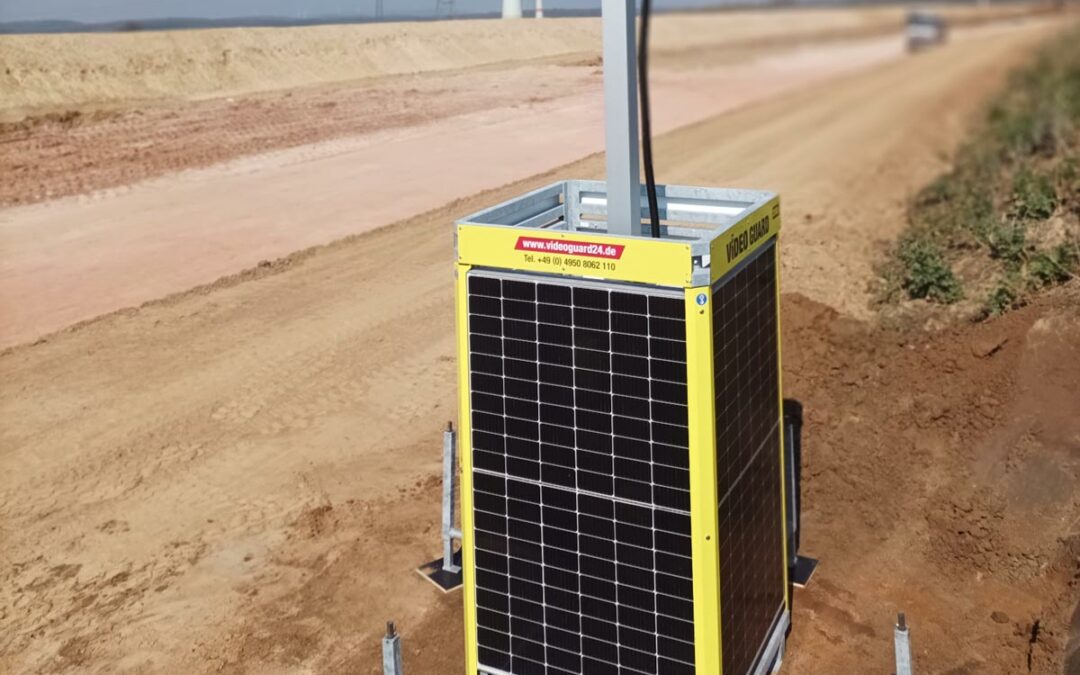
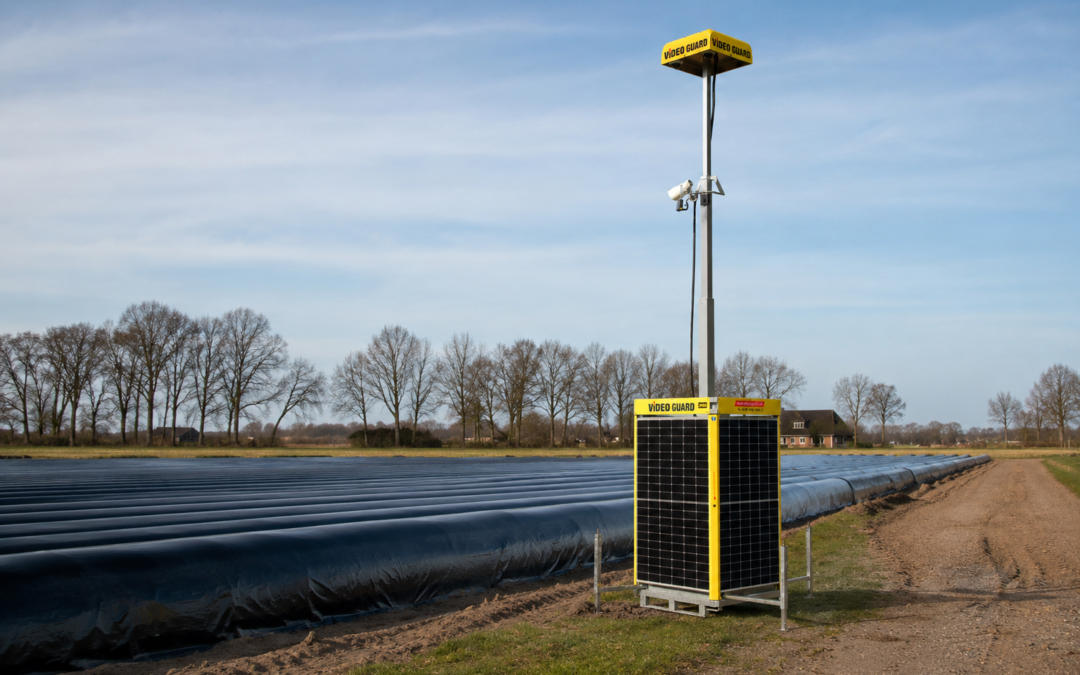
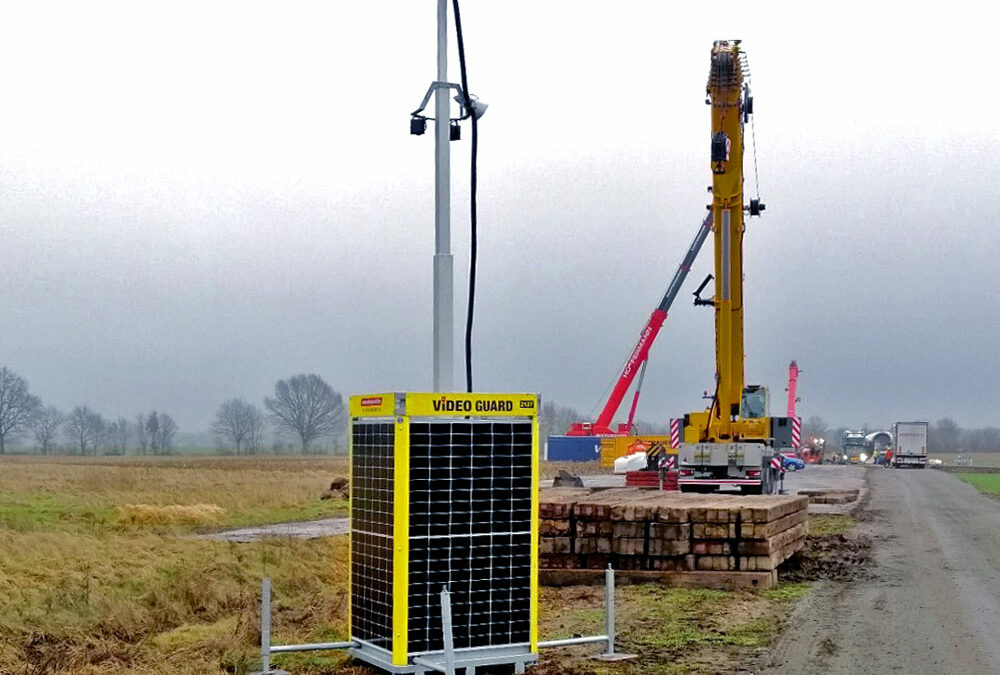
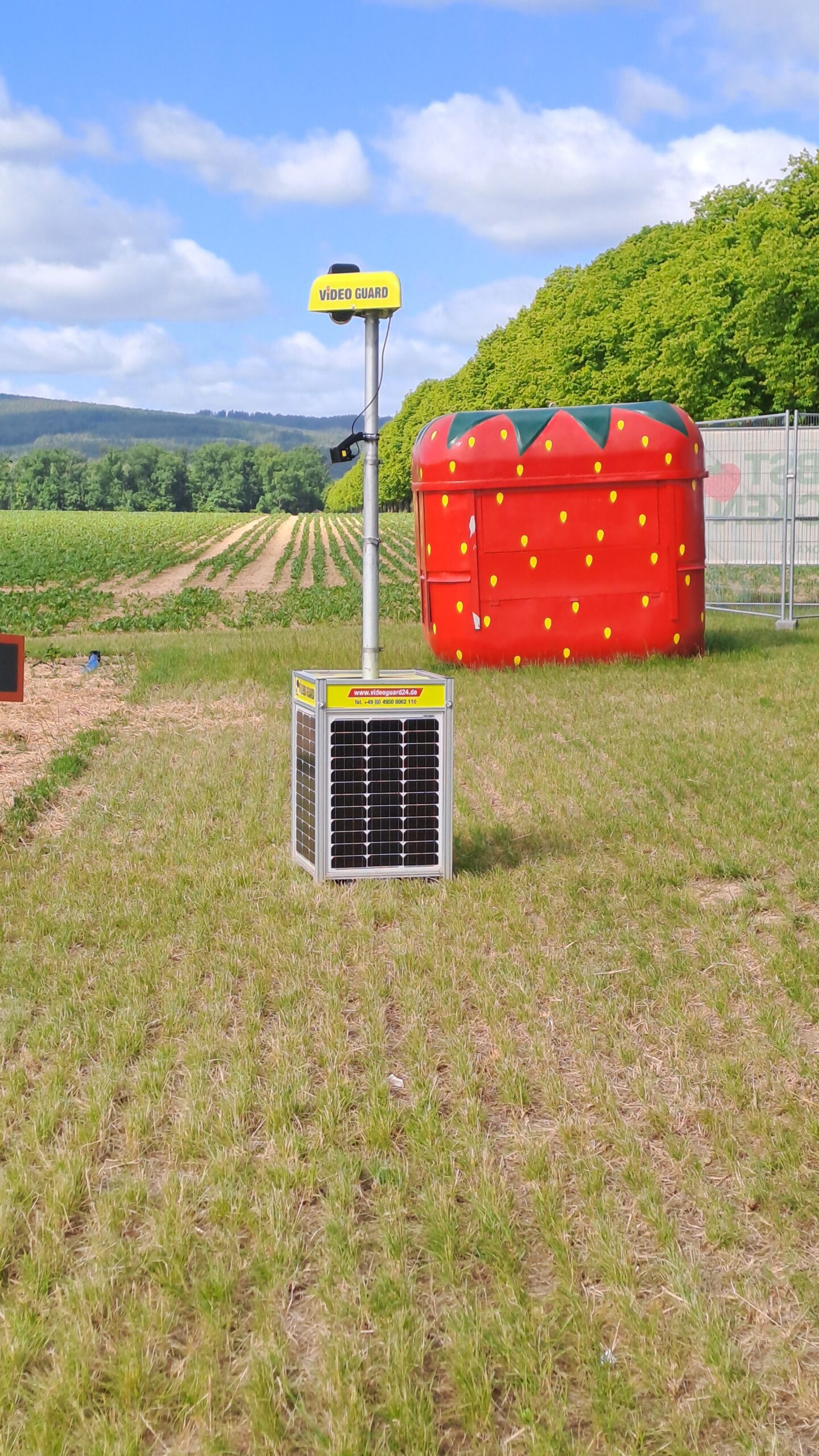
VIDEO GU ARD’s solutions operate independently using solar power—ideal for remote fields without grid connection—and are ready for use in a short amount of time. What these systems do:

24/7 Monitoring and GDPR-Compliant Recording
AI-Powered Motion Detection and Visible Deterrence
Direct Live Address
Especially when it comes to pick-your-own farms and preventing theft at farm stands, the advantage lies in the combination of technology and human response. Anyone who tampers with an honor system cash box at night will not only be filmed but also confronted directly. In most cases, that’s enough to scare off intruders before any damage is done.
What You Can Do Now as a Farmer or Farm Store Owner
Before you start thinking about technical solutions, it’s worth taking a structured look at your situation:
1. Track shrinkage: Keep track of the actual amount of shrinkage in your field or farm stand over several weeks. Only by looking at the numbers can the investment be properly evaluated.
2. Conduct a risk analysis: When do most incidents occur? At night, on the weekend, or when it’s crowded? This information determines the type of coverage.
3. Check structural measures: Are the cash registers securely anchored? Is the signage clear? Are the signs clearly visible?
4. Check your insurance coverage: Many insurance companies now require proof of safety measures. Mobile video surveillance can be an advantage in this situation.
5. Seasonal rental of mobile surveillance systems: Flexible rental models are ideal for temporary applications, such as during the strawberry or asparagus season—you only pay when you actually need the protection.
Conclusion: Trust is good—security is better
Direct marketing thrives on the trust between producers and consumers. But this trust can only be maintained if it is not systematically exploited. Anyone who wants to run a pick-your-own farm or a farm stand these days can hardly avoid thinking about effective safety measures.
The good news is: You don’t have to choose between an open-concept design and a high-security wing. Modern, mobile video surveillance can be used on a seasonal basis; at best, it acts as a deterrent and, in an emergency, intervenes immediately—without you having to stand out in the field at night.
This way, your direct sales will remain what they’re meant to be: a fair arrangement between producer and customer—not a self-service buffet that threatens your livelihood.
Frequently Asked Questions
Is picking strawberries from a field without permission a criminal offense?
What is the average amount of damage at pick-your-own farms?
What should you do if the farm stand has been robbed?
Report the incident to the police immediately and document the damage with photos. Notify your insurance company and secure any video recordings. Next, you should review your security plan: How were the perpetrators able to gain entry? What are the vulnerabilities? Anyone who finds their farm store has been robbed should consider installing an active video surveillance system connected to a monitoring center after the first incident at the latest—a passive camera alone is generally not enough to prevent future incidents.