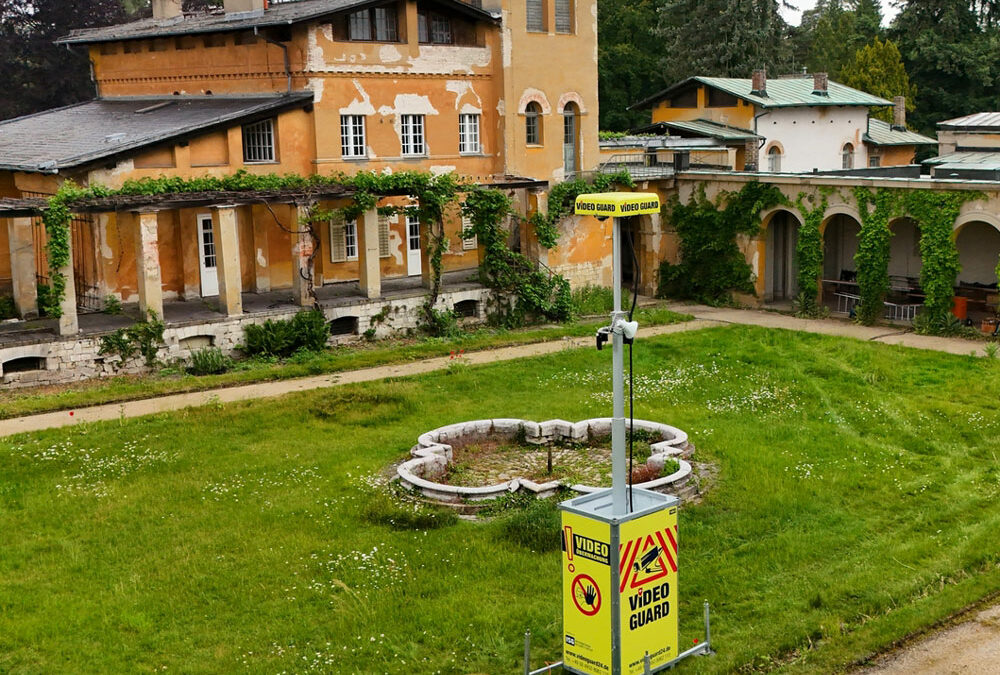
Wind farms are rarely located in busy areas. Open spaces, sparse development, and very little traffic—that’s exactly what makes a location attractive for energy production. And that’s exactly what makes it a problem when it comes to security. After all, effective wind farm monitoring must function under conditions that are taken for granted elsewhere: Often there is no permanent power connection, no stable cellular network, and no police station that can arrive on the scene within a few minutes.
For renewable energy operators and technical operations management, this creates a gap that cannot be closed using traditional security technology. Anyone who wants to protect a remote energy facility needs a strategy that can withstand three realities: a lack of infrastructure, professional perpetrators, and limited time.
Why Remote Wind Farms Are Targets for Professional Gangs
The threat situation has escalated significantly in a short period of time. In 2023, the Lower Saxony State Criminal Police Office recorded fewer than ten cases of copper theft from wind turbines—by 2024, the number had already reached the mid-double digits, more than five times as high, with a sharp increase in the fourth quarter. This trend will continue in 2025 as well.
This isn’t about occasional offenders. According to investigators, the groups operate in a highly professional manner, dividing up tasks and working in teams of up to eight people. They bring specialized tools and climbing harnesses to cut the high-voltage cables from inside the towers at great heights.
The reason remote locations are so appealing is simple: there is no social control there. No one walks by, no one looks out the window, no one calls the police. A perpetrator can work undisturbed—sometimes long enough to neatly cut cables into one- to two-meter-long pieces and strip the insulation.
The real enemy is time—not the camera
This is where the flaw in many security concepts lies: they rely on recording. A camera films, records, and provides footage afterward. That might be enough for a location right in the heart of the city. That’s not enough for a remote wind farm.
After all, in some cases, 30 minutes or more can pass between when the alarm is triggered and when a patrol arrives. By then, the perpetrator will be long gone—with the copper. What remains is a recorded crime, but no damage was prevented. Our experience has shown time and again that those who merely document things are generally too late.
To make matters worse, the technical reporting chain alone does not provide protection. Although a wind turbine sends an error message when it is disconnected from the grid, that doesn’t mean a service technician will be at the turbine within just a few minutes. Often, the actual theft doesn’t take place until the second half of the night, when no one is around to react.
The key factor, then, is not image quality alone, but the ability to actively avert danger at the moment the crime occurs. At remote energy sites, intervention is what matters, not documentation. A system must deter the perpetrator while he is still there—not just provide evidence after he has disappeared.
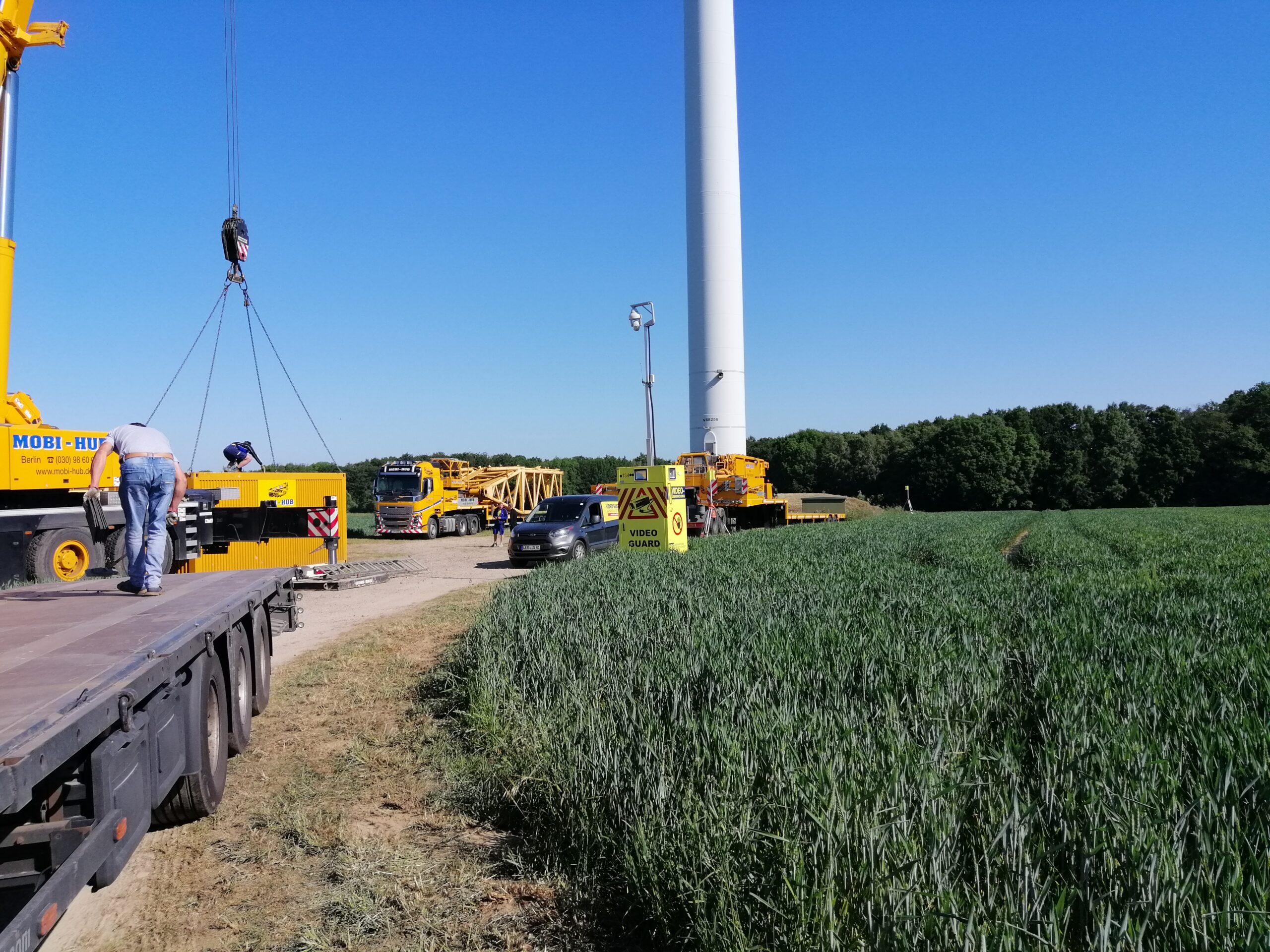
Three Requirements for Wind Farm Monitoring Without Infrastructure
What capabilities must a system have in order to function at a location without electricity, a network, or quick access? Three points are non-negotiable.
1. Energy Self-Sufficiency
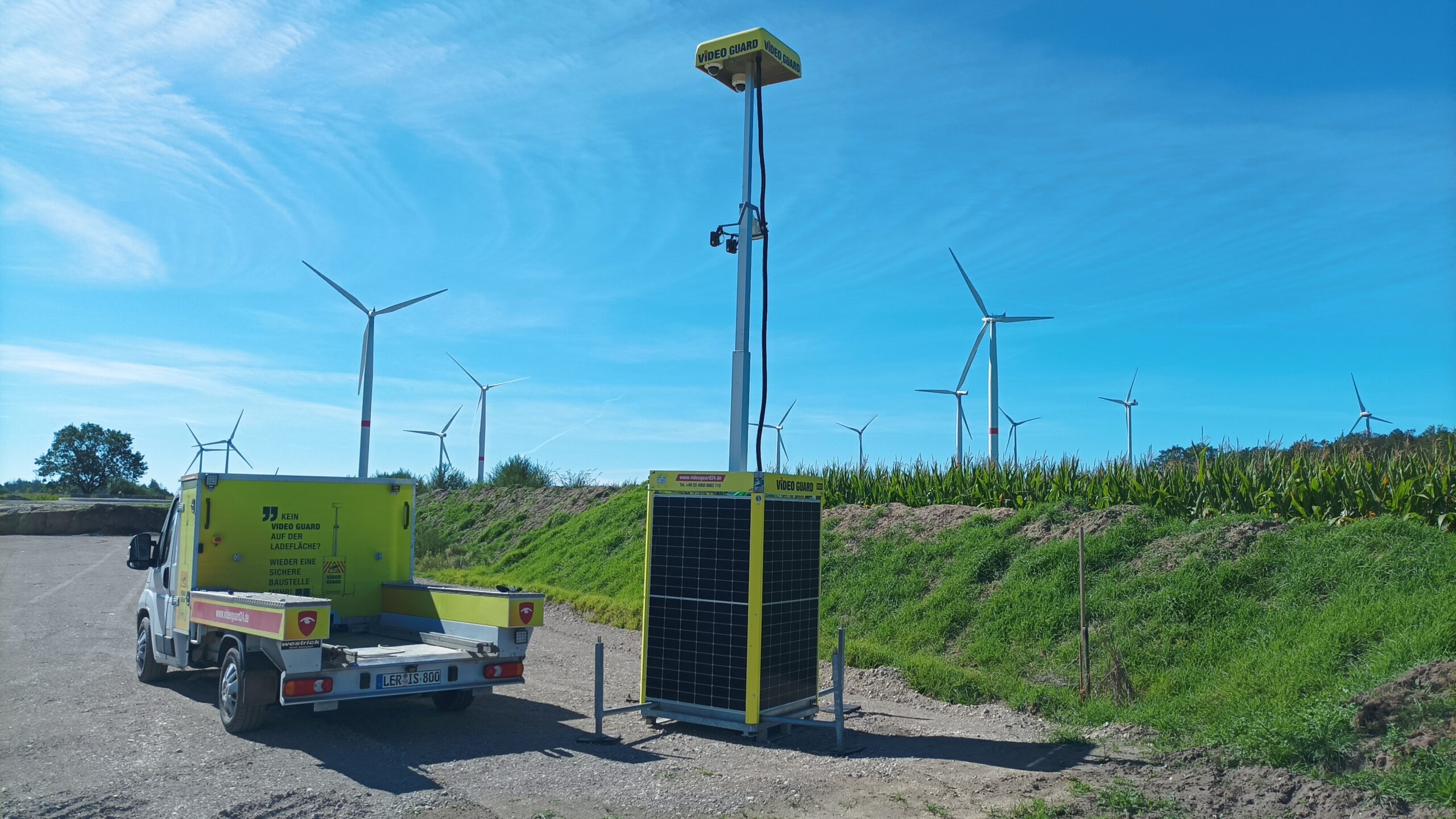
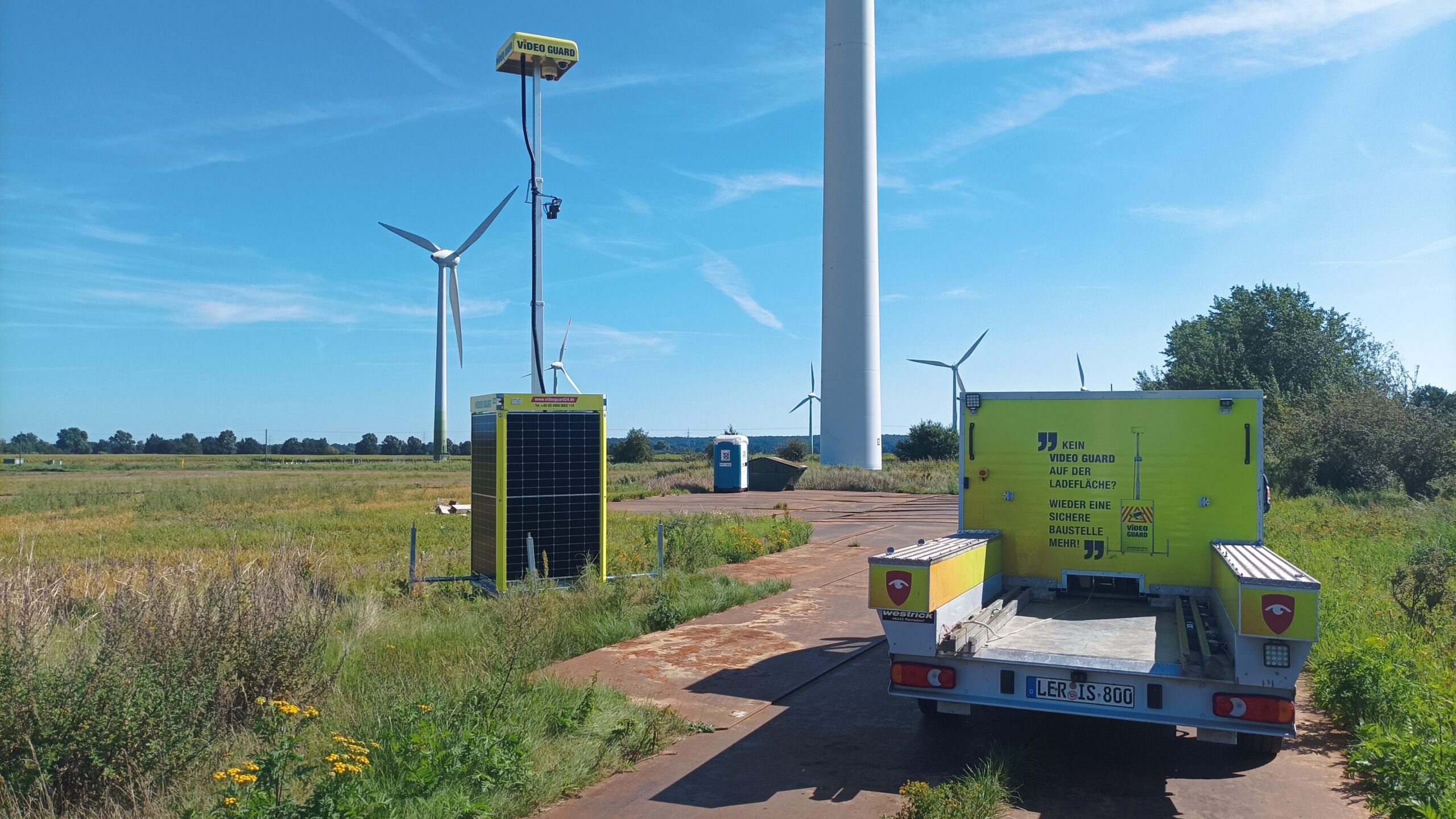
Without a permanent power connection, the system must be self-sufficient. A combination of solar panels, a high-capacity battery, and an environmentally friendly fuel cell ensures that the monitoring system continues to operate even when sunlight is low or for weeks without grid power. This ensures that protection remains active around the clock—regardless of whether a cable has ever been laid to the site.
2. Transmit without a network connection
An alarm is only useful if it gets through. At locations with poor reception, robust, redundant data transmission is needed to ensure that the connection to the control center remains intact even when the local network is weak. The analysis should also be performed directly on-site using edge computing so that relevant events can be detected without any delay.
3. Take active action instead of passively storing information
The most important point: The system must be able to act. AI-powered cameras detect an intruder and report it to a staffed control center. There, trained staff assess the situation in real time and address the perpetrator directly over a loudspeaker. Often, simply speaking directly to intruders is enough to deter them—long before the police arrive. Recording is then merely a piece of evidence, not the actual protective measure.
Conclusion: Protection begins before the first drive
A wind farm in the middle of nowhere cannot be secured using the same methods that work in a built-up area. Without power, without a stable network, and without rapid response, what matters isn’t what a system records after the fact, but what it prevents at the moment the incident occurs. Anyone who combines self-sufficient technology, redundant transmission, and a control center capable of intervening—and incorporates the installation phase from the very beginning—closes the very gap that professional criminals specifically exploit.
Are you planning or operating a wind farm in a remote location? Talk to us about a safety plan that works even without existing infrastructure.
Frequently Asked Questions About Wind Farm Monitoring
How does wind farm monitoring work without an electrical connection?
Is a video recording sufficient as a safeguard?
When should monitoring begin?
Is video surveillance GDPR-compliant if it borders public walkways?
Yes. Only the clearly defined area is monitored; adjacent private and public areas are automatically blacked out. A prerequisite is a clearly enclosed area and a clearly visible notice indicating that video surveillance is in use.