Theft and vandalism at construction sites are a nightmare for building owners, contractors, and construction companies alike. Whether it involves stolen tools, machinery, or building materials, the damage is often immense and can delay the entire construction process. But the key question is: Who bears financial responsibility in such a case?
The answer isn’t always clear-cut. It depends on the terms of the contract, the stage of construction, insurance coverage, and current court rulings. In this article, we clarify the most important aspects of liability for theft and vandalism at construction sites and provide guidance on how building owners, contractors, and subcontractors can reduce risks.
Why Vandalism and Theft Are on the Rise at Construction Sites
The number of thefts from construction sites in Germany has been rising for years. Criminal gangs primarily target easily accessible tools, building materials, and construction equipment. Metals such as copper and machinery that can be resold quickly are particularly valuable.
The problem: Construction sites are often inadequately secured. A construction fence or temporary lighting is usually not enough to deter organized criminals. For those affected, this means high costs and additional security risks.
In addition to the theft of materials and equipment, damage caused by vandalism occurs time and again—often, the greatest costs are not caused by the theft itself, but by the delays and logistical problems it triggers.
In addition, many perpetrators deliberately strike at night or on weekends; they are familiar with common security vulnerabilities and take advantage of the confusing layout of construction sites. Without documented security measures, it is difficult for those in charge to take a clear stance toward insurers or contractual partners in the event of an emergency—which further complicates issues of liability in the event of theft or vandalism on the construction site.
Common Types of Damage and Risks
A theft at a construction site almost always leads to a chain of negative consequences:
• Direct financial losses due to stolen items
• Delays in the construction process due to the need to replace tools or machinery
• Follow-up costs due to contractual penalties or additional rental equipment
• Uncertainty and a loss of trust, which also take a toll on staff and clients
This makes it clear: It’s not just about stolen materials, but about the overall risk and cost management of a construction project.
Common Forms of Construction Site Vandalism
The building is often the target of vandalism and unauthorized use. Areas that remain unattended outside of working hours are particularly affected. Typical damage ranges from construction trailers and containers covered in graffiti to equipment, tools, or machinery that has been vandalized. Smashed windows, broken-open doors, and destroyed locks are also among the recurring problems.
Keys are often broken off, barriers damaged, or building materials stolen or scattered about. In addition, it is not uncommon for restroom facilities to be knocked over, broken into, or used for purposes other than their intended ones. Equally annoying are parking areas littered with trash left behind by unauthorized visitors or passersby.
In addition to targeted acts of property damage, there are also cases that are not immediately classified as vandalism but can nonetheless cause significant delays—such as when homeless people seek shelter in construction trailers or unfinished sections of buildings. These situations present not only organizational challenges but also safety and hygiene issues that require additional measures.
Who is liable in the event of damage? – Client or contractor?
The issue of liability in cases of theft or vandalism on a construction site is complex and depends heavily on the specific circumstances of each case. As a general rule:
• Client: Bears overall responsibility for the construction site until the work has been accepted. He must ensure that appropriate safeguards are in place.
• Contractor: In many cases, the contractor is liable for the equipment, tools, and materials he uses and brings to the construction site himself.
• Contractor: Is obligated to protect the work performed by the contractor from damage until acceptance—though not automatically against theft unless this is specified in the contract.
The contractual agreements regarding liability between the client and the contractor are crucial. If these clear rules regarding the duty to maintain records are included, it will be easier to determine who is responsible.
Court Rulings and Legal Bases
In the past, courts have ruled on liability for thefts at construction sites on several occasions. Basically, they are guided by three principles:
1. Contractual Provisions — Does the contract specify who is responsible for security and protection?
Phase 2—Prior to acceptance, the contractor is generally liable for the work performed; after acceptance, responsibility passes to the owner.
3. Insurance Coverage — If there is construction or machinery insurance in place, it may cover the damages.
Here’s an example: If a construction site was inadequately secured with a construction fence, making it easy for thieves to steal materials, the court may hold the building owner partially responsible.
What the law requires—and what actually provides protection in practice
Not every measure is legally required—but it still plays a role in the assessment in the event of a claim. Generally speaking, theft protection on construction sites can be categorized into three levels:
1. Minimum requirement (legally required)
Construction fences, clearly marked access controls, and basic lighting are considered
generally recognized duty to provide security. If these measures are not implemented, this may be considered “organizational negligence” in the event of liability.
2. Enhanced security measures (from an organizational standpoint)
3. Active Prevention (Effective Against Professional Offenders)
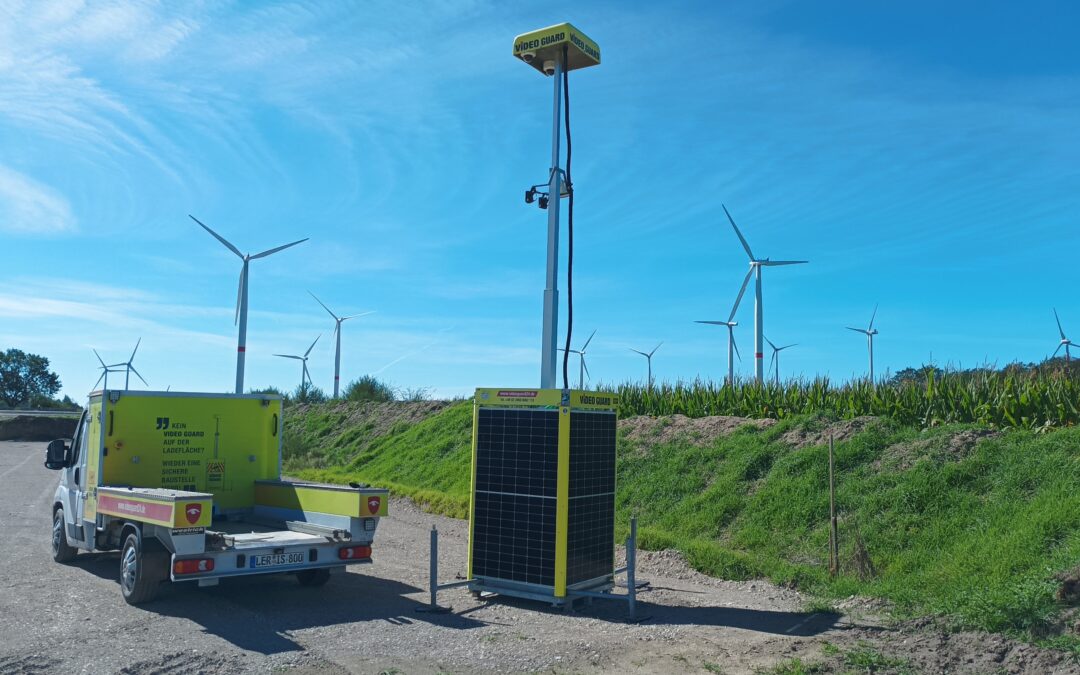
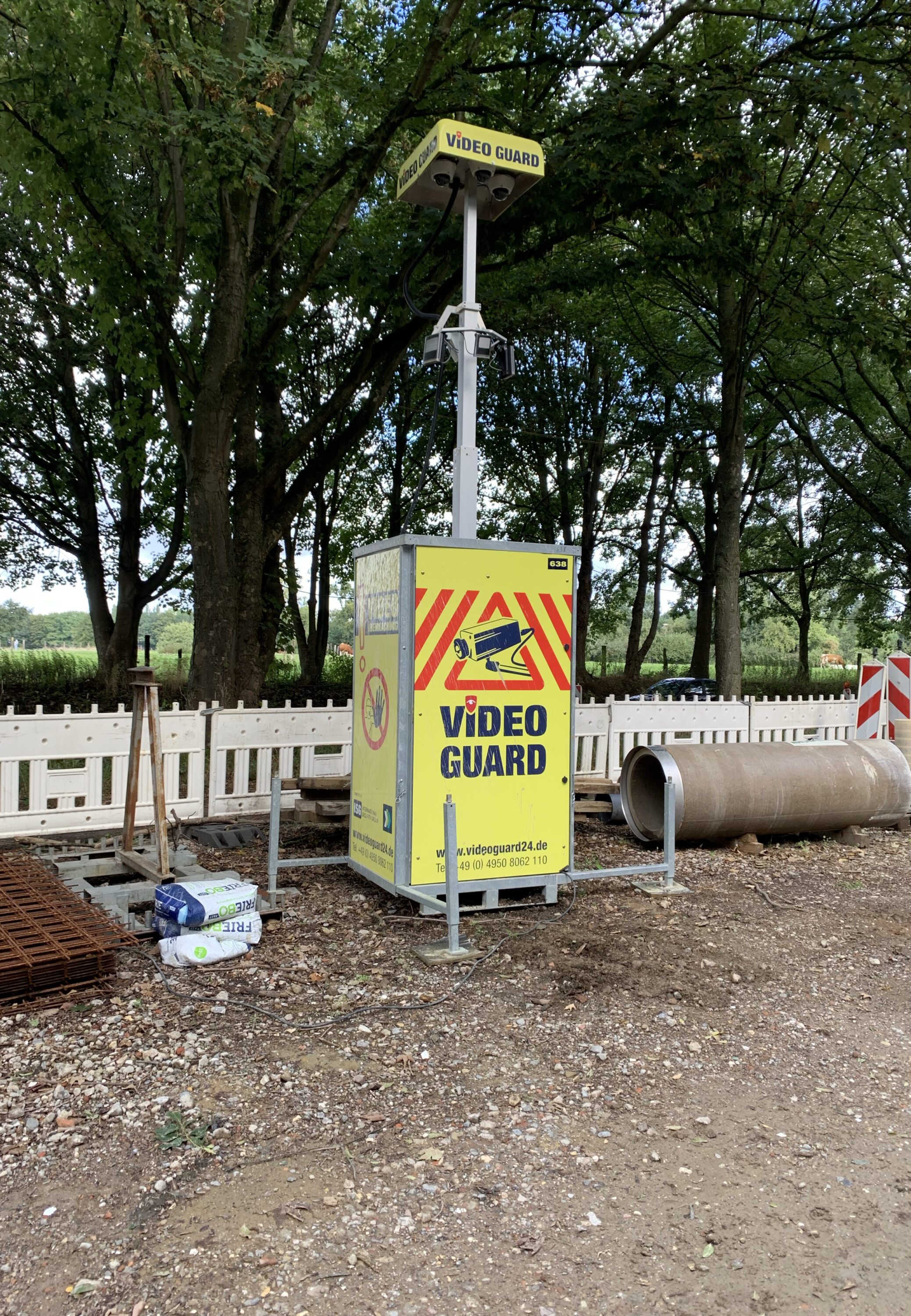
In practice, mobile video surveillance systems linked to an alarm system are considered the most effective measure not only for documenting thefts but also for preventing them before they occur. Many insurers are therefore increasingly viewing it as an “appropriate level of protection” for high-value projects.
Conclusion & Outlook
Theft and vandalism on construction sites are a problem with significant financial and organizational consequences. Liability depends on many factors—in particular, contracts, the construction phase, and insurance coverage.
The following applies to building owners and construction companies:
• Clear contractual provisions provide legal certainty.
• Appropriate insurance coverage reduces financial risks.
• Above all, however: Effective security measures, such as mobile video surveillance, ideally prevent thefts from occurring in the first place.
Anyone who focuses solely on liability issues when it comes to theft protection isn’t thinking far enough ahead. It is crucial to actively minimize risks and ensure that construction sites are professionally secured from the very beginning.