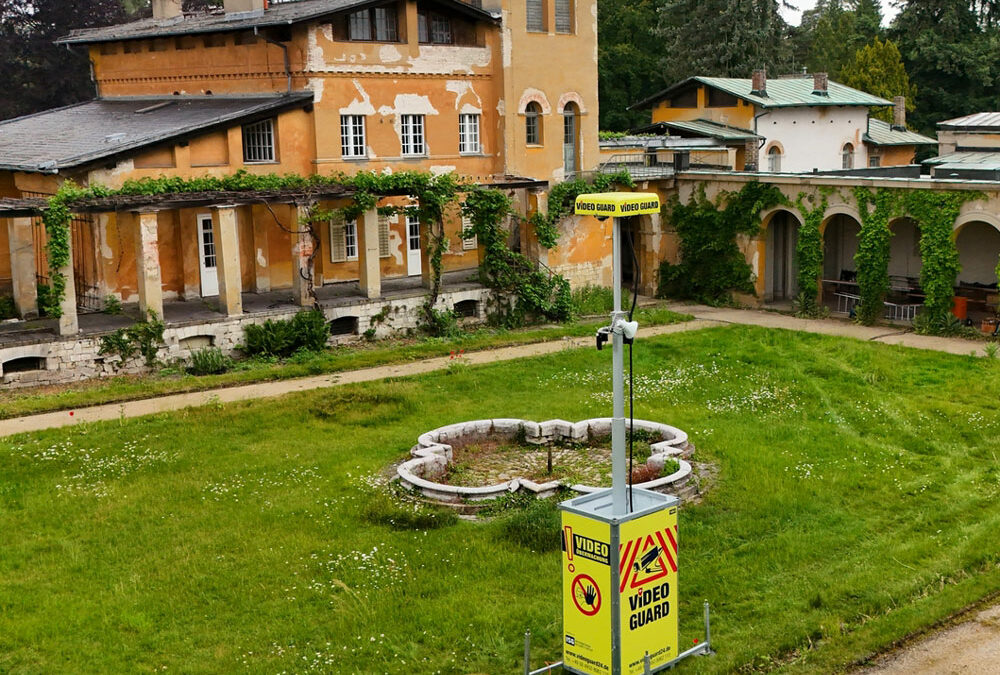
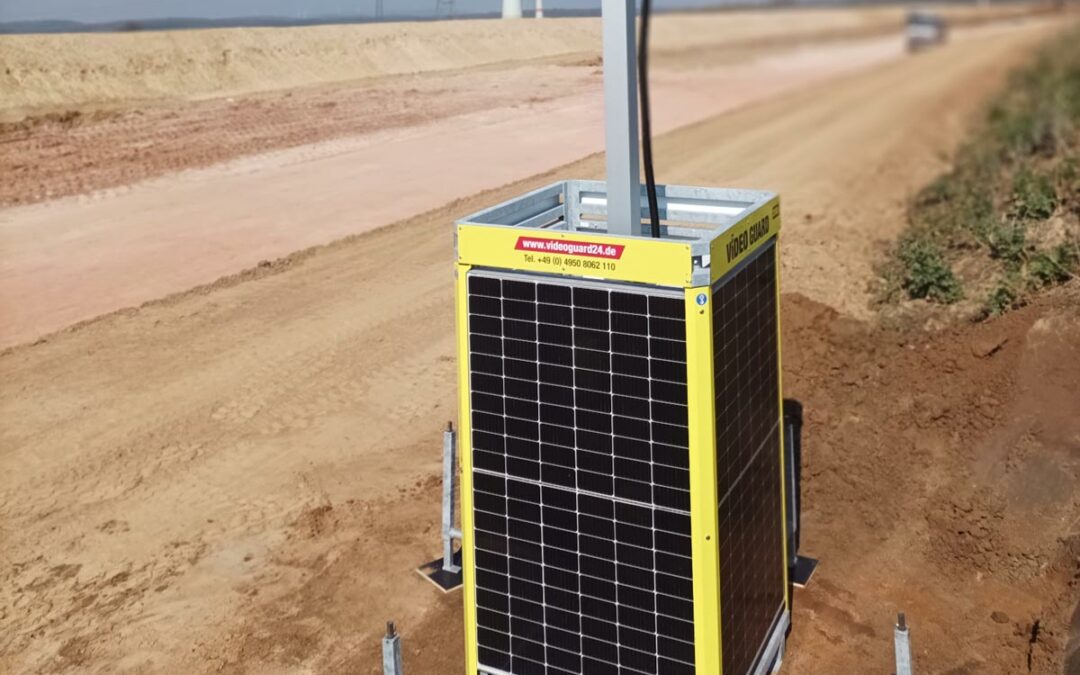
A container terminal, an inland port, and a bulk cargo handling area: All three share a common problem. The area is large, operations are fast-paced, and the sheer number of people and vehicles passing through the site each day makes it nearly impossible to keep track of them using traditional methods. Freight forwarders, subcontractors, service technicians, drivers from all over Europe—in a pinch, no one knows exactly who was where and when.
That’s exactly what becomes a problem as soon as something is missing. Because while the loss itself is often manageable, the consequences rarely are: the effort involved in sorting things out with the insurer, discussions about liability issues in the supply chain, and, in the worst-case scenario, a customer who terminates the business relationship. In practice, it becomes clear time and again that it is not the theft itself that costs the most, but the lack of documentation afterward.
How the risk situation has evolved at cargo handling areas
Freight crime is no longer a marginal issue. According to industry estimates, approximately 26,000 truckloads go missing in Germany each year. Direct damage to goods is estimated at about 1.3 billion euros, plus approximately 900 million euros in consequential costs.
What is noteworthy here is where these acts take place. A Europe-wide analysis for February 2026 classifies just under half of all recorded cases as “thefts from facilities”—that is, from warehouses, transshipment areas, and company premises, not from highway rest stops. So the image of the tarp-slasher at the rest stop doesn’t quite capture the whole picture. The focus is where the merchandise is: on the sales floor.
Added to this is a risk that specifically affects ports: the so-called “internal perpetrator.” The Hamburg Police describe individuals who use their professional roles in the port industry to assist organized criminal groups—for example, by passing on location data for individual containers or by interfering with logistics processes. Access control alone is of little help here, because these individuals are authorized to be on the premises. It is not entry that attracts attention, but behavior: staying in parking spaces at night, moving outside the regular work area, and vehicles parked in the wrong place at the wrong time.
The real problem: The surface is moving, but the camera isn’t
Permanently installed video equipment has a structural disadvantage in loading areas. It is designed for a specific land use—and that use rarely lasts long.
In practice, we see the same patterns over and over again:
- Seasonal shifts: Space allocated for bulk cargo or project cargo shifts throughout the year because handling volumes fluctuate.
- Project-Specific Storage Space: A large order occupies an area that was previously used for maneuvering for six months.
- Construction and maintenance phases: Wharf wall renovations, crane installations, or track work create temporary areas containing high-value materials but lacking any infrastructure.
- Redensification: Where there used to be a thoroughfare, there are now containers—so the pole ends up in the wrong spot.
Documentation: The Moment When Security Concepts Prove Their Worth
The most common response after an incident is: “We know something is missing—but we can’t pinpoint when.” This is exactly where the costly consequences arise. Without a reliable point in time, it is not possible to assign responsibility within the supply chain. The loss is then allocated to the area where the evidence is weakest.
A monitoring system with a logged alarm history reverses this situation. You can show when an area was uneventful, when movement was detected, and what response followed. For the claims settlement process, this is often more valuable than the video footage itself.
ISPS, KRITIS, and GDPR: The Regulatory Framework
Operators of port facilities involved in international maritime transport are subject to the ISPS Code. This requires the appointment of a security officer, the development of a security plan based on a risk assessment, and the implementation of tiered security measures depending on the threat level. Monitoring is not an end in itself, but rather a means of providing evidence: The plan must demonstrate that critical areas are continuously monitored.
At the same time, the transportation and traffic sector is coming into sharper focus as a result of the KRITIS umbrella law. Physical security, resilience, and documentation are becoming regulatory requirements—no longer just IT security.
That leaves the issue of data protection. Areas under surveillance must be clearly demarcated and marked as being under video surveillance; public areas and neighboring properties must not be recorded. Therefore, make sure to choose systems that are GDPR-compliant, have servers located in Germany, and are ISO 27001-certified.
Conclusion: Flexibility beats camera density
In transshipment areas, it is not the number of cameras that determines security, but rather the flexibility of their locations. Anyone who reorganizes storage areas on a seasonal basis needs a monitoring system that can be reconfigured just as quickly—combined with analytics that separate the relevant from the irrelevant, and a control center that takes action in an emergency rather than just recording events.